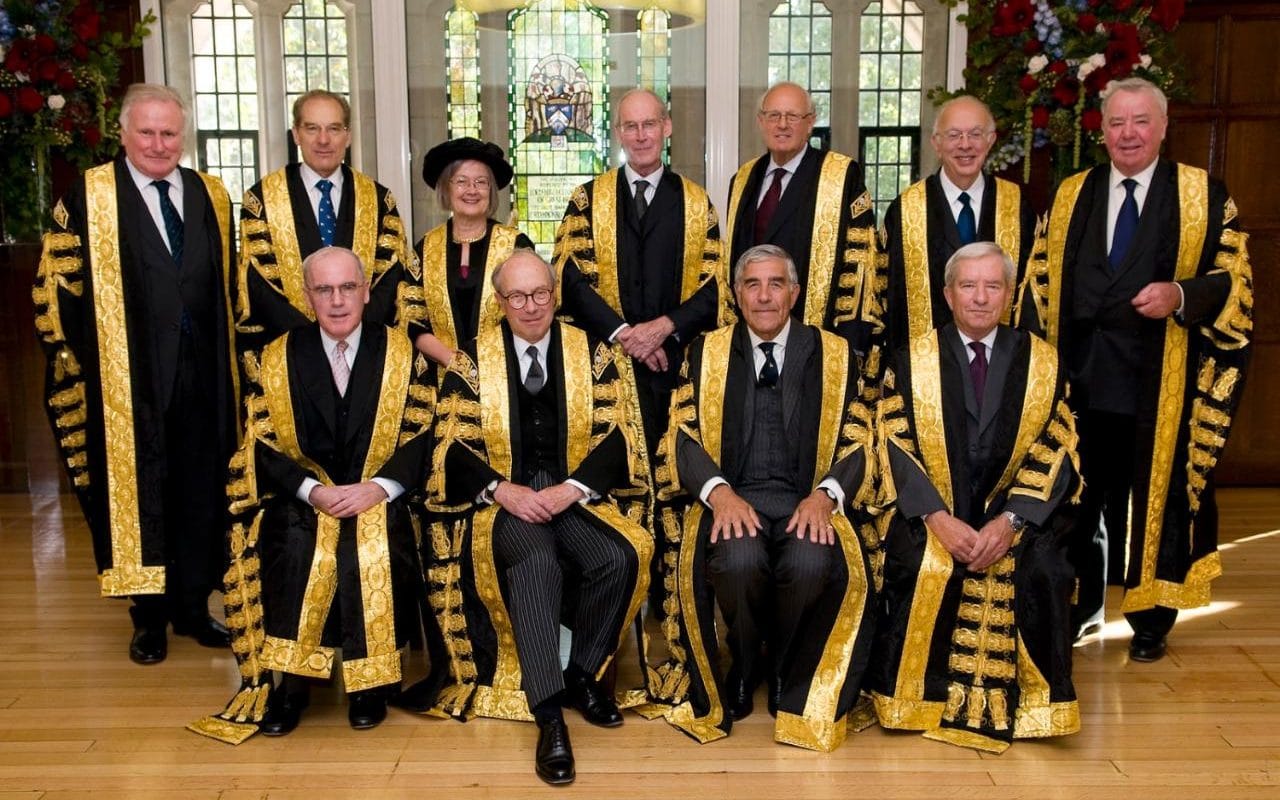
The Justices of any Supreme Court globally are revered as wise. Not so much because they have the final say over any legal matter, and by implication, all knowing, surely, they have to be “all knowing” to have the final say. Indeed they are all juristic luminaries in their own works and rights, they are like the living Oracle of Law. The Justices of the UK Spupreme Court are like the High Priests in the Temple of Justice and all who petition in that temple not only defer to them but perceive them as a symbol of Justice. Blackstone’s reference to judges as the living oracles of the landlord is understandable given the fact that the English legal tradition is one dominated by judges in lower courts and Justices in upper courts. Law, without justice, is legitimation of tyranny; justice, without law, is fraught with anarchy; justice riding law, with a mission and a vision, arrives at destination.
Today the Supreme Court has done something it has never done before, they meddled in politics, they failed to uphold the principles of separation of powers and they proved that they are not above mistakes after all. Although the finality of the Supreme Court decision is sancrosanct, only it can overturn its decision and it has done so in the past. It was Robert Jackson, Justice of the United State Supreme Court who said, “we are not final because we are infallible, but we are infallible only because we are final.” Justices of this court are human beings capable of erring. It will certainly be short-sighted arrogance not to accept this obvious truth. The decision by the court today to rule that Prorogation was unlawful may be final, but it doesn’t necessarily mean it is the right one.
It would be tragic to reduce the court to a sterile role and make an automaton of them like the ‘remainers’ have done, it would be doom to invite them to dangerous territory of politically meddling. And it is unwise for the Supreme Court to fall for this trap. I believe it is the function of the courts to keep the law alive, in motion, and to make it progressive for the purpose of arriving at the end of justice, without being inhibited by technicalities, to find every conceivable, but acceptable way of avoiding narrowness that spells injustice. Short of being a legislator, the court, to my mind, must possess an aggressive stance in interpreting the law and I think the Supreme Court failed to do that today.